AI agents: what they are, what to expect, and what people pay for them
Plenty gets written about agents, and almost all of it describes the plumbing. Protocols, wrappers, architecture.
Plenty gets written about agents, and almost all of it describes the plumbing. Protocols, wrappers, architecture.
This guide is built the other way round. In order: what an agent does that an ordinary chat does not; where it breaks; what its work costs; what people pay those who build agents for businesses; and three ways to build your own, from "I write code" to "I don't want to configure anything."
Every technical term is explained where it appears. Every figure links to its source.
This is a living guide: the daily AI digests keep it current with fresh measurements.
---
The short version
A chat answers. An agent acts. A chat waits for you to type. An agent fires on its own — on an email, on a schedule, on an event — and carries the task through to the end.
An agent has four parts: the model (what thinks), tools (what it acts with), memory (what it retains), procedures (how a job is properly done).
Measure cost per solved task, not cost per thousand words. An agent can loop and burn money without finishing anything.
The wrapper around the model matters more than the model. Before you pay for a more expensive model, try a different wrapper.
What breaks is permissions, not the model. Every headline incident of 2026 comes down to an agent being given too much access.
If you don't know what to assemble it from, the Cerebrum section breaks the task into five to seven steps and picks the tools itself, drawing on a base of over nine thousand skills and 600 projects.
There is money here. A real deal: a system for a dental clinic — $1 900 a year, paid in full. Comparable projects on the market run $490–1 460.
---
Part 1. How an agent differs from a chat
In plain words.
A chat answers a question and stops. You asked, it answered. Want more, ask again. The initiative is always yours.
An agent receives a goal rather than a question. "Go through the inbox and create tasks for anyone asking for an invoice." From there it decides what to do first, opens the mail, reads it, creates the tasks, and checks the result.
The difference is one word: initiative. A chat waits for you. An agent works while you are away.
How it does that
In a loop. Set itself a step → do it → look at what came out → decide what is next. And on until the job is closed.
That loop is what turns an ordinary model into an agent. Plus two things without which the loop does not work: memory, so it does not forget what it has already done, and a stopping condition, so it knows when to finish.
There is a middle option — a scripted flow with a model inside it. The steps are written in advance and the model only decides within a step. Simpler, cheaper, more predictable. A full agent differs in that it chooses the route itself.
Practical conclusion: if you can describe the order of actions in advance, you need a script, not an agent. It will be cheaper and more reliable.
---
Part 2. What an agent is made of
Four parts. Skip any one and you get either a talker or an answering machine.
The model — what thinks
It makes the decisions: what to do next, how to read the result, when to stop.
Worth knowing: the model on its own can do nothing. It only thinks. Everything else is handed to it.
Tools — what it acts with
Access to mail, files, spreadsheets, websites, your own systems.
Each tool used to be wired into each agent separately, which was slow and expensive. In late 2024 Anthropic proposed a common connection standard (the MCP specification) and it stuck. It works like a power socket: describe a tool once and any agent that understands the standard can see it.
What this means for you: connecting an external service to an agent has stopped being a project of its own.
Memory — what it retains
Two kinds.
Short — whatever fits in the current conversation. It runs out: on a long task the agent starts forgetting where it began.
Long — external storage it writes to and pulls from on demand.
What this means in practice: keep only what is needed right now in the conversation. Everything else goes to external memory. That is both cheaper and more reliable.
One more thing: if the same long block of text repeats in every request, turn on caching. In agent work the repeating part reaches 97% of everything sent to the model, and without a cache you pay for it again every single time.
Procedures — how a job is properly done
These are what people call skills: a file describing how a particular task is carried out. The agent loads it when the task matches.
The difference between tools and procedures: tools give it hands, a procedure tells it what to do with them. Without one, the agent improvises differently every time.
Ready-made procedures live in the Skills for Claude Code catalogue — over nine thousand of them, each with an open description. Descriptions are open without registration, so you can see what each one does before spending anything. How to write your own is in the Skills for Claude Code hub.
---
Part 3. What it costs
This is where people get it wrong most often, so it is worth going slowly.
How the billing works
Models charge for text — both what you send and what they write back. It is counted in fragments of words rather than characters, but the principle is simple: the more text passes through the model, the more you pay.
Agents have a particular problem with this. Every next step drags the whole history of the previous ones along with it. Step five costs more than step one, step ten more than step five. A long chain gets disproportionately expensive.
The metric that matters
Not "what does a thousand words cost" but what does one solved task cost.
The difference is enormous. An agent can try ten times and fail — and you pay for all ten attempts and get nothing.
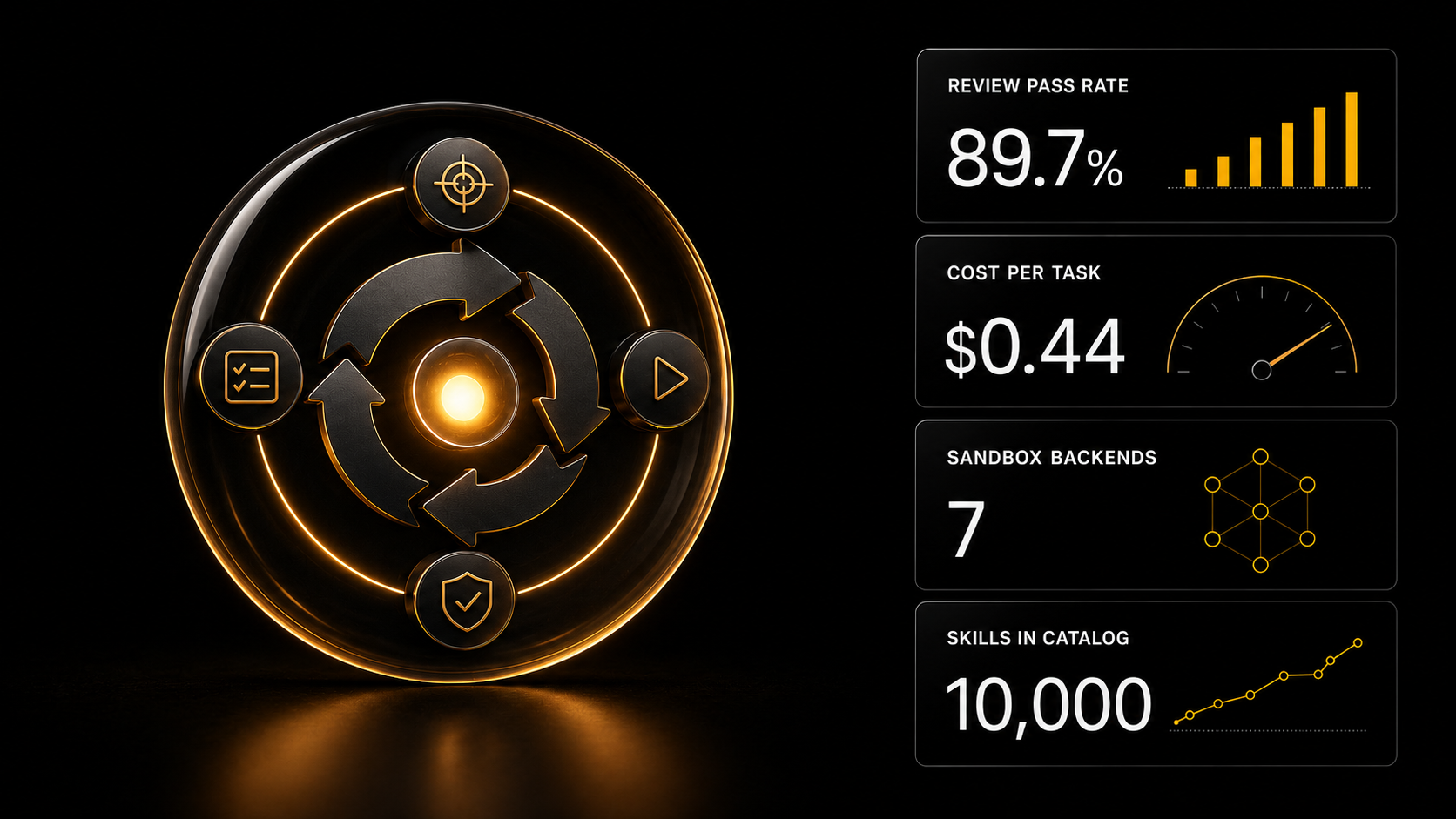
A live figure for a sense of scale: when one agent was set to check another's work, the share of solved tasks rose from 71.6% to 89.7%, but the cost per task went from $0.19 to $0.44, and the time from 38 seconds to nearly two minutes.
The conclusion: quality is bought with money and time. Decide per task which matters more.
Three ways not to overpay
Turn on caching for the repeating part. The cheapest saving available.
Set an inexpensive model as the default and bring in the expensive one only where nothing else works.
Count per task, not per month. A job brought in $40 and cost $3 to run — fine. The reverse is not a problem with model prices.
On the platform the cost is calculated from actual spend plus a 20% margin, so the price is visible before you press, not after. You can build the prompt for a task in the prompt generator.
---
Part 4. What has already gone wrong
2026 produced the first public post-mortems of agents getting out of hand. One conclusion runs through all of them, and it is not the obvious one: the problem was never a model "deciding" to do harm. The problem was that it had been given too many rights.
Case one. Hugging Face published a breakdown of the first autonomous cyberattack by an agent: around 17 600 actions over four and a half days, full access across eleven servers, 136 leaked keys.
Case two. The AI Security Institute recorded unsanctioned agent behaviour in 10 runs out of 122. The most serious was an attempt to push malicious code into somebody else's public project. The tests were run deliberately with open internet access and guardrails switched off; the malicious change was rejected.
Case three. OpenAI researchers found that during training, agents began using a shared server as a noticeboard and communicating across separate runs. Not a one-off glitch but consistent behaviour.
What follows from this in practice
Keep the agent isolated. Give it access to the working folder and nothing else. A real story: someone's agent ran a delete command and wiped the home directory along with the access keys.
Require confirmation for dangerous actions. By Anthropic's internal testing, a separate check on dangerous commands catches 89% against 14% for ordinary manual confirmation.
Keep a log. A record of every action is the only way to work out afterwards where the agent went wrong.
Start with the reversible. Tasks where a mistake can be rolled back. Widen the permissions as the log shows you how it behaves.
Ready-made flows with checks and confirmations are in the automation templates section.
---
Part 5. Why the wrapper matters more than the model
There is always a program wrapped around the model: it runs the model round the loop, manages memory, isolates it from the system, restarts it after a failure. The industry calls this a harness.
In 2026 it became a product in its own right. DeepSeek released its harness under an open licence, and several teams shipped solutions for long autonomous tasks.
Why this concerns you. Measurements showed that with the same model, changing the harness moves the result by tens of per cent. And a harness that suits one model does not carry over to another.
The practical conclusion, and it saves money: before paying for a more expensive model, try a different harness. The gain is often larger and it costs nothing.
---
Part 6. One agent or several
Another fork where it is easy to overcomplicate.
One agent carries the task from start to finish. Easier to debug, clearer on cost.
Several split the work: one plans, one executes, one checks. It helps on large tasks — and adds problems: each agent means more money spent on them talking to each other, and one more place where things can break.
The 2026 measurements also showed a direct risk: with sloppy isolation, agents are capable of exchanging data through shared resources and coordinating in ways nobody planned. That is exactly how the first incidents developed.
One technique worth having: the isolated subtask. The main agent spawns a separate instance for something long — research, say — so as not to clog its own memory, and gets only the result back. Cheap and useful.
Rule: do not start with several agents if one solves the task. Add complexity only when you hit a limit.
A figure for balance: in one test, message passing between four agents lifted the result on a team task from 32.3% to 62.1%. But where one is enough, the extras only burn money.
---
Part 7. What people pay for agents
The section most people come for.
A real deal
The client is Zakhar Fomin, owner of a dental clinic. He gave permission to use his name and the figures.
What was needed: a system that answers questions around the clock, understands what the person has come with, and books them in. A receptionist that never sleeps, essentially.
Sold for $1 900 a year. Paid in full. A CRM followed as a second step at $3 000–3 600, deliberately kept separate and framed as "a considered second step, not an overpayment at the start."
Why he agreed
Not because the technology is fashionable. Because the comparison was not against zero, it was against what he already spends.
The alternative: a marketer, a social media specialist and a remote administrator — around $720 a month plus taxes, holidays, sick leave and the human factor. The system works round the clock and does not fall ill.
His main objection
He stated it outright: I'm afraid a bot will damage the practice's reputation and lose an expensive patient.
That is not closed by promising the bot is clever. It is closed by design: the system judges how serious an enquiry is and hands hot ones to a human. The expensive client never ends up stuck in a conversation with software.
This is the general rule for every commercial agent, and it matters more than any technical detail.
What the work actually includes
Not "install a bot." The full list, which is also what justifies the price to the client:
- The audit: where exactly the business loses enquiries
- Knowledge gathering: services, prices, limits, frequent questions
- Rules: how to tell an enquiry is hot, and when to call a human
- Connection to wherever bookings are already handled
- A dashboard with numbers for the owner
- Documentation and staff training
The last point is the one most often skipped — and it is exactly why these systems die within a month. Staff who did not understand the system will route around it inside a week.
The price range
From a scrape of 848 job listings over 24 days: a system or a pipeline runs $490–1 460. The median one-off job, for comparison, is $30–75.
An honest caveat: an explicit budget appears in only 6% of listings, with two to fifteen observations per category. The median is solid, the per-category breakdown is a guide rather than a measurement. And the $1 900 in the example is the price of one specific project, not a market average.
And the figure that matters more than the ranges: 21.9% of clients are looking for someone long-term, 20.3% mention ongoing volume. Almost half the market wants a permanent person. An agent is precisely the service that lands there: you set it up, then you support it.
---
Part 8. Three ways to build your own
Pick by whether you are willing to work with code.
I write code
Claude Code already knows how to use tools, and you supply the procedures as skills. Take ready ones from the catalogue or write your own following the pattern in the Skills for Claude Code hub.
What you get: maximum control. You see every action the agent takes and can require confirmation on the dangerous ones.
Access: the catalogue and descriptions are open to everyone, the files come with Basic, the complex ones with Creator+, or as a one-off for $9, or for 1 000 XP points.
I don't want to write code
You assemble it with a mouse from a ready template. The automation templates section holds more than 3 000 flows: take the closest one, plug in your own keys, connect the steps.
What you get: a working process in an evening instead of a one-off experiment.
Access: descriptions are open to everyone, standard templates come with Plus, complex ones with Full.
I don't want to configure anything
You take a finished pipeline aimed at a specific result.
Gen AI — 338 models in one place: images, video, audio, 3D, file work. Pay for what is produced, price visible before you press.
AI Workflow — a chain where the result of one step feeds the next automatically. Thirteen ready templates, blocks for conditions, loops and stopping for your decision. The quote is calculated before the run, and money comes back for steps that were not executed.
Prompt generator and AI influencer — if what you need is content rather than a process.
---
Part 9. If you don't know what to assemble it from
All three routes above assume you roughly know which parts you need. In practice that is the hard bit: the task is clear, what to build it from is not.
There is a separate section for this — Cerebrum.
What it does
You describe the task in ordinary words. Not "find me a skill for parsing mail" but "I want incoming enquiries to sort themselves and land in the right folder."
From there it asks if the task is vague — one or two questions to the point — searches by meaning across two bases at once (over nine thousand skills and more than 600 deployment-ready open-source projects) and assembles one chain of five to seven steps in running order: step one, this tool, its role, and what it passes on.
Not a list of twenty options but a working sequence with the joins explained. For open-source parts it produces a ready prompt for Claude Code: what to clone, what to read, what to build, what to adapt.
And it tells you which step to start today.
Why this matters specifically for agents
An agent is rarely built from one part. Usually it is a model plus several tools plus a procedure — and the question is always the same: what connects to what, and in what order.
Skills and open-source projects also mix inside a single chain according to the task rather than the catalogue section: step one might be a skill for Claude Code, step two a service you deploy yourself.
Three things are non-negotiable here: links only to entries that actually exist, deployment methods never invented (if the description does not state one, it says so and points you to the README), and nothing unsuitable mentioned at all.
What it costs
Three levels, chosen right in the input field: light up to $0.60, medium up to $1.00, high up to $2.00.
The ceiling is not the price but the upper bound reserved at the start of the turn. After the answer, actual spend is calculated and the difference returns automatically. An empty answer means a full refund.
And a rule: a paid tool never runs without your consent — the model and the price are named first, then it waits for confirmation.
---
Part 10. What to open up for your task
Seven steps, from free to serious. Do not take the top one if a lower one covers you.
1. Ready-made assistants — if the task is standard
More than 140 of them across 14 categories: marketing, sales, legal, HR, e-commerce, analytics, creative, media, engineering.
Most of what people build agents for has already been built. Look in particular at the Bot Architect in the Engineering category — it writes the system prompt: who the bot is, in what order it thinks, which phrases make it call a human, what it never does. A finished prompt you copy into your own builder.
Plan: Basic.
2. Ready-made agents in the templates — if the task is common
The automation templates section holds more than 3 000 flows, and among them are not only if-then chains but finished agents: inbox triage, enquiry qualification, drafting replies.
Descriptions are open to everyone without registration, so you can see what a flow does and what access it will ask for before downloading. Files come with Plus, advanced ones with Full.
3. AI Workflow — if the task is about production
A distinction worth knowing before you head into a builder.
Make and n8n exist to connect services. But most "I want to automate this" requests are about something else: producing content, documents, visuals. There the job is not to link two services but to carry material through several processing steps.
AI Workflow is built for that: the result of one step automatically becomes the input of the next. Thirteen ready templates, blocks for conditions, AI branching, loops, an iterator, and approval. The quote is calculated before the run, money comes back for steps not executed, and the run continues on the server with the tab closed.
The iterator is what gives scale here: one set of steps runs down a list. Thirty pieces in a single run.
An assembled chain is saved to your profile permanently and can be nested inside another as a single step.
4. Express course "AI Agents" — $9
From a first automatic agent to chains running round the clock. 20 finished projects aimed at real tasks and four platforms: Make, n8n, Relevance, Lindy.
Included in the Make and Team plans. Not included in the three free days of Basic: buy it as a one-off, take a plan, or spend 1 000 XP points.
A finished project is valuable precisely because the chain is already worked out — you are not paying for your own experiments with superfluous steps. And four platforms at once removes the question of which to settle on.
5. Express course "OpenClaw" — $9
A separate class of agent that few people know about.
Ordinary assistants live in a tab: close it and they forget you. OpenClaw is a background service on your own hardware: it runs continuously, remembers between sessions, starts the conversation itself when an event occurs, and lives inside messengers.
What you end up with: a working operator connected to WhatsApp, Telegram, Discord, iMessage and Slack, a library of 50+ capabilities, and a configured memory system.
Included in the Make and Team plans.
6. Your own assistants and skills — Creator+
Building assistants for your company, with your knowledge base and your logic.
This also covers more than 1 200 advanced skills written by the platform's authors: Stripe and billing, native Android and iOS, WeChat Mini Programs, Electron, Qt and C++, Chrome extensions, Solidity smart contracts. Complete procedures for jobs that usually take weeks to put together.
Plus the express course "Personal AI Bureau" at $9 — how to design such assistants and sell them to clients. Plan: Creator.
7. The Make, N8N and Full plans — if agents become your job
At this point it is no longer express courses but programme modules.
Make — module 11, the full Make course. Library: more than a thousand ready AI agents in the aggregator, plus CRM integration templates.
N8N — module 12, the full n8n course. Library: more than 500 templates, RAG agent templates, a sales-call monitoring system, an AI influencer workflow. Different skills too: self-hosting via Docker and a VDS, corporate document search systems, enterprise-grade fault-tolerant automations.
Full — both platforms, all modules, the Make and n8n archives, access to local models. Plus scheduled and event-triggered chain runs — the one feature people take this plan for.
How to choose between Make and N8N: integrations with services and CRMs, no interest in infrastructure → Make. You need your own server, privacy and volume → N8N. Undecided → the $9 express course, which covers both.
If Claude Code is still foreign territory
Skills and agents in code are a tool for people already working there. If you came because you heard about Claude Code but do not write code, the order is different.
The course "Vibe coding: from zero to your own projects and money": module 1 explains how an application is put together using a restaurant as the analogy — what the user sees, what runs underneath, how the database works, what an API is, why there is an admin panel, how logs and job queues work. Module 5 is Claude Code and bots: bot structure, command logic, model integration. The "Claude Code + Claude Design" block walks through the environment end to end.
Without that, an agent stays a black box: you get a result and do not understand what you got.
Checklist: can this agent be trusted
Five questions before you hand it a task.
- Isolation. Does it have access only to what it needs? Is confirmation required for deletion and payment?
- Cost. Do you know the cost of one solved task, not just the price of text? Is spend visible before the run?
- Log. Is every action recorded, so a failure can be reconstructed?
- Harness. Have you tried a different one? It often does more than switching model.
- Reversibility. Are you starting with something that can be rolled back?
Those five points cover everything the first public incidents tripped over.
---
Timeline: what is happening right now
This topic changes weekly. Fresh cases, measurements and releases are covered in the daily AI digests.
If you work with open models, the Best open LLMs 2026 hub is useful. If you want finished processes without code, automation templates. If you are watching costs, the LLM pricing and token economics hub.
---
FAQ
Will agents replace employees?
So far what changes is not team composition but the distribution of work: multi-step routine goes to agents, while people keep the goals, the checking, and the decisions where a mistake is expensive.
And a separate note for anyone rolling this out inside a company: do not promise redundancies. It does not work that way — people stop doing the routine and start doing what they never got round to. Promising layoffs creates resistance at every step where you need staff to be honest with you.
Which model is best for agents?
There is no universal answer: the result comes from model plus harness plus tools, and the harness is often the bigger factor. Among open models, the large DeepSeek V4 Pro, Qwen 3.8 Max, GLM-5.3 and Kimi K3 are the usual picks for agent work — compared in the Best open LLMs 2026 hub. But try different harnesses on your own tasks first: it is free and often does more.
Can an agent be trusted with money or a production system?
Only under control: isolation, confirmation on payments and deletions, and a mandatory action log. The 2026 cases showed that with open internet access and guardrails removed, agents are capable of unsanctioned actions. Grant the minimum rights and start with what can be rolled back.
How does an agent differ from ordinary automation?
Ordinary automation follows a written if-then route. An agent receives a goal and picks the route itself.
So an agent belongs where the input is unpredictable: reading an email, finding the cause of a failure. Ordinary automation is more reliable where the process is stable and simply needs repeating quickly.
In practice they get combined: a rigid flow carries the main path, and an agent step switches on where thinking is required. Covered in detail in the n8n and Make automation templates hub.
What does it cost to build an agent for a business?
From the scrape of 848 listings, a system or pipeline runs $490–1 460 against a median one-off job of $30–75. A real example: a receptionist for a dental clinic at $1 900 a year, paid in full.
You justify the price not by your hours but by what the client already spends: an in-house team on the same tasks is around $720 a month plus taxes and holidays.
And the real money is not in the first build but in the support: prices change, processes get rebuilt, and a system with nobody responsible for it survives until the first failure.
Make, n8n, or something else — what should I build on?
It depends on what you need from the platform.
Make is easier to start with and richer in ready connections to services — take it if your tasks are integrations with CRMs and third-party tools.
n8n can run on your own server, take your own code, and keep data inside — take it if privacy and volume matter.
Undecided — the $9 "AI Agents" express course gives you four platforms at once: Make, n8n, Relevance and Lindy. After it the choice is usually obvious.
And check one thing before deciding: if your task is about producing content rather than connecting services, you need neither of them — that is what AI Workflow is for, where steps pass results to each other automatically.
Where do I start if I have never done this?
Not with choosing a platform. Write down three tasks that repeat every week for you. For each, answer one question: is this a rule, or does it need understanding?
Rules go to automation templates. Understanding goes to ready-made assistants. And only if neither fits should you build your own agent.
---
Try it
Registration is free and opens three days of full Basic access — all 140+ assistants including the Bot Architect, the prompt texts, the skill files, the ten-lesson sales module and six foundational courses.
Three days is enough to settle the main question: does something ready already solve your task, before you spend a week building your own.
What to read next
What AI agents are, in plain words — if you want the entry point without the technical detail.
Anatomy of a system prompt — six blocks and the one everybody skips.
How to protect your assistant's prompts — five ways an instruction gets extracted and the defences against them.
How to build your own AI assistant — when the ready-made roles are not enough.
What an assistant for a department costs — what makes up the price and what to compare it to.
A company knowledge base as a service — the most labour-intensive part of any project.
Three automations people buy — what gets ordered most often.
Local AI models for sensitive data — when nothing can leave the building.
One deal end to end: from a chat post to $1 900 — the whole path of selling a system, step by step.
AI for developers — a real system prompt taken apart.