AI video generation in 2026: how it works, the models, and how to write a prompt
AI video generation means a model creating a clip from a text description or from an existing frame.
AI video generation means a model creating a clip from a text description or from an existing frame.
In 2026 it is one of the most in-demand uses: models have learned to hold the same character across tens of seconds, accept dozens of reference images, and assemble several scenes in sequence.
Below: how the two main approaches differ, how to write a description that produces the clip you wanted, which models are strong right now, how to keep a character consistent from frame to frame, what this work pays, and how to assemble a clip on the platform.
This is a living guide: the daily AI digests keep it current with new models and techniques.
---
The short version
Two approaches: from text and from an image. The first is for when the scene does not exist yet. The second is for when you have an exact frame that needs animating with its details intact.
A prompt is a brief for a camera operator, not a wish. Subject, setting, action over time, camera movement, light, style.
The main headache is the character drifting between shots. Solved with reference images, frame-to-frame generation, or a fixed persona.
Generation is the smaller part of the work. Most of the time goes on the script and the assembly. That is what the difference in pay is for.
The pay gap is tenfold: a short clip is $18–45, a video done end to end is $245–550.
Always start with a draft. A short clip at low quality shows whether you described the right scene, before the expensive final run.
---
Part 1. Two ways to make a video
From text. You describe the scene in words and the model creates the clip from nothing. Handy when the scene does not exist yet and has to be invented.
From an image. You supply a finished image and the model adds movement. Needed when you have an exact frame — a product photo, a poster, a character — and it has to move with its details preserved.
Strong systems support both modes and the options in between: generating between a first and last frame, extending a clip, editing individual scenes.
Music and sound generation sits alongside and usually runs through the same pipeline.
The three parameters used to describe quality
Length of an uninterrupted clip. How many seconds the model sustains without a cut.
Consistency of character and scene. The ability to hold the same appearance, style and composition across the clip rather than reinventing them every second.
This is what separates a usable result from a pretty but useless montage.
How many reference images it accepts. The images you supply to set the required look. The more you can give, the more accurately the model holds a particular product, face or style.
---
Part 2. Which models are strong right now
The bar rises almost monthly, so this is a snapshot rather than a permanent picture.
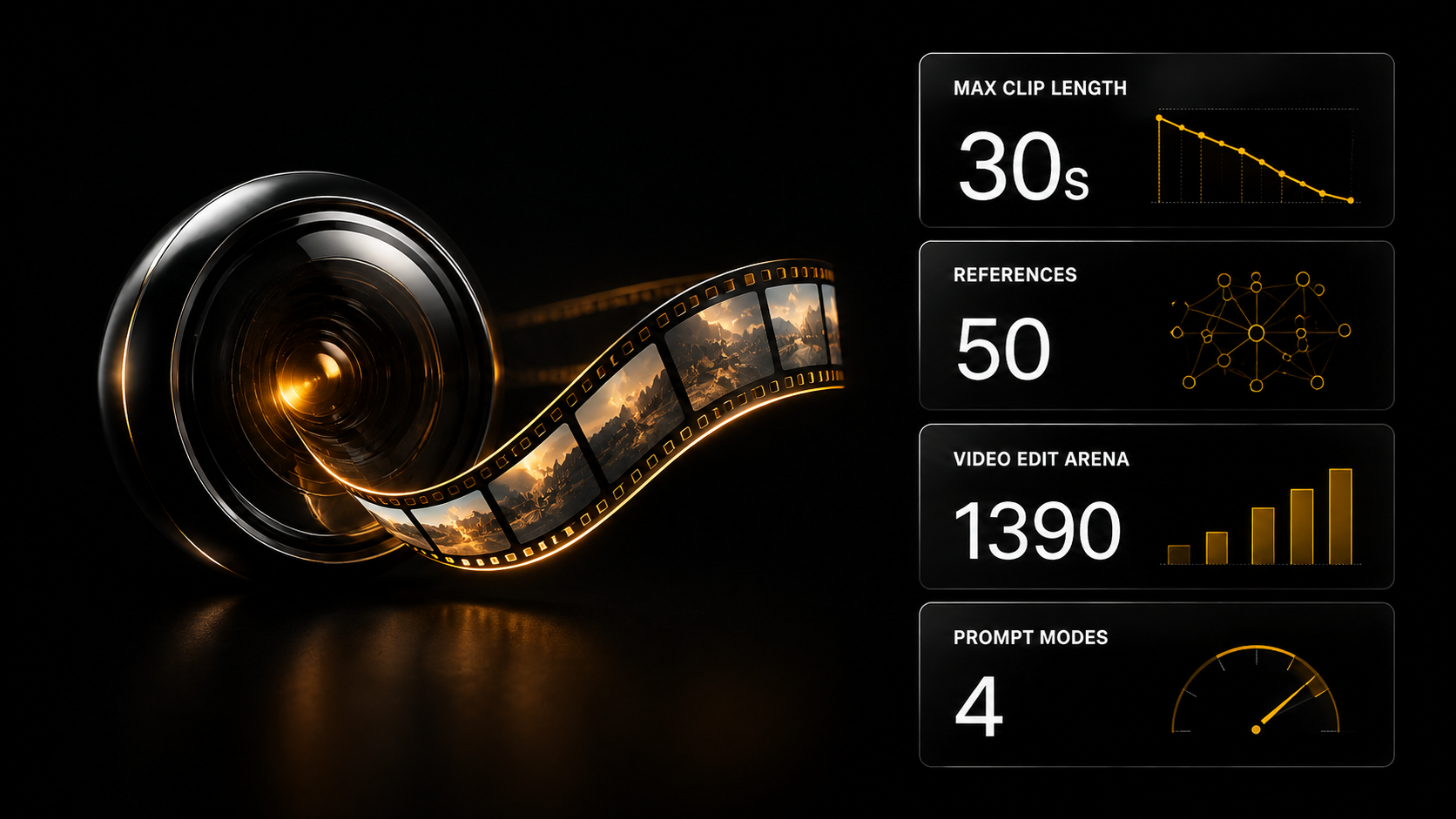
MiniMax H3 — an open model that took the top of the independent Video Arena among open models by around 280 points, and in image-to-video mode came out essentially first overall. A related model later topped the Video Edit Arena across all entrants with 1 390 points.
Seedance 2.5 from ByteDance gained thirty-second clips without cuts, three-minute videos with a consistent character, editing of individual frames, and up to 50 reference images. Testers' practical caveat: 720p for now.
Music3 from MiniMax — open weights for a compact model that turns a description and song lyrics into a finished track on ordinary hardware. Handy for scoring clips.
The full and always current picture of releases is kept in the daily digests, and open video tools are collected in the Open Source section.
---
Part 3. How to write a description that produces what you wanted
A good description says not only "what" but "how it is shot".
The model does not guess directorial decisions — it follows what you wrote. So build the description like a brief for a camera operator:
- Subject — who or what is in frame
- Setting — where it happens
- Action over time — what changes by the end of the clip
- Camera — shot type and movement
- Light — source and time of day
- Style — what it looks like
The more precisely camera movement and the change of action per second are specified, the more predictable the result. A vague "nice video about a city" gets interpreted however the model likes.
First and last frame
A powerful control: state where the clip starts and where it arrives. The model builds the movement between them instead of inventing an arbitrary path.
In practice it is convenient to supply an exact first frame and describe in text what should change by the end.
The prompt generator helps put a proper description together: it works through an "art director → animator → engineer" method, reads the attached frame and produces a structured description for the task.
Three mistakes that ruin a clip
A vague description. Neither the scene, nor the camera movement, nor the action was specified, so the model filled the gaps itself. Fixed by the six-point brief above.
Too many events in a short clip. In five or ten seconds a model cannot play out three scene changes, and the result falls apart. Break the idea into separate clips and edit them together.
Ignoring consistency. The character is supposed to be the same person and you supplied neither reference images nor a fixed persona — so the model reinvents them in every shot.
One technique against all three: start with a draft and read the result critically. Whatever the model got wrong is what you clarify.
---
Part 4. How to hold a character and a style
The central pain of generative video. Three approaches that work.
Reference images. Feed the model several images of the required look so it holds the appearance. One or two are enough for a one-off scene; a recognisable product in an advert needs several angles.
Frame-to-frame generation. The first and last frames set the boundaries the model builds movement inside.
A fixed persona — for talking characters. If you need the same person across a series of clips, their appearance and voice get fixed in advance: a trained face model and a voice clone. From then on the persona simply "acts" a new script.
That is exactly how the AI influencer section is built: a persona is a bundle of a trained face, a voice and a base frame, plugged into every clip. The character stays recognisable from video to video.
Practical guide: start with the minimum number of references on the draft and add more if the model drifts on the feature that matters.
---
Part 5. Where a good source frame comes from
The section people skip, and it determines the result more than the choice of video model does.
In image-to-video the model does not invent the scene — it animates what you gave it. A bad source will not become a good clip: if the product is shot crookedly, the light is flat and the composition is accidental, movement will only underline it.
Hence the rule: in the frame → video pairing, the frame decides more.
Two different tools for two different jobs
They get confused constantly, and that is why people reach for the wrong one.
Create a frame from nothing. The scene does not exist and has to be invented: a concept, an atmospheric shot, a stylised visual. Midjourney is what works here, the strongest model for image generation.
It has one problem and it is technical: a high barrier to entry. The service requires a subscription and is driven by its own commands rather than familiar fields, and in some regions it is not directly reachable.
The express course "Midjourney from zero to control" takes you through those obstacles and straight to the level of control. What you end up with: a working account, an understanding of the commands, and the ability to get an image in the style you want with a composition you control, rather than a collection of pretty accidents.
$9, the Plus plan.
Change an existing frame. You have a product photo, a real room, a specific person — and you need to remove something, change the background, add a detail, place an object in a different scene. Midjourney does not work that way: it creates something new rather than editing what exists.
Different models are needed here — ones that understand the context of an image and edit it precisely.
And the second job in the same category: holding one character across a series of frames. For an ad campaign, a line of listings or a blog with a consistent face, that is not an option but a condition: nobody needs one beautiful frame, they need a series.
The express course "ChatGPT Images & Nano Banana" covers generating and editing inside chat models: from a first prompt to branded content with one character across a series of frames.
$9, the Plus plan.
How this fits into work on a clip
The order that saves the most.
Step 1. Assemble or refine the source frame. Check it on a small screen — that is how the viewer will see it.
Step 2. Only then send it to be animated. Regenerating an image is cheaper than regenerating video: an image starts at $0.12, video at $0.22 and runs up to $11.95 depending on the model and length.
Step 3. If you need a series, fix the character first, then make all the frames, and only then animate. Otherwise on the third clip you discover the face has drifted and everything has to be redone.
Both courses are included in the Plus plan. Neither is included in the three free days of Basic — get them with a one-off $9 purchase, the Plus plan, or 1 000 XP points.
---
Part 6. The parameters that set both the look and the price
Four of them. Worth knowing before the run, not after the bill.
Resolution. Sets the detail. Many models output 720p initially, with anything higher coming from a separate upscaling step.
Aspect ratio. Matched to the platform: 16:9 for horizontal clips, 9:16 for stories and short video, 1:1 for a feed.
Duration. The key constraint. The current generation has pushed uninterrupted generation into tens of seconds, but the longer the clip, the more expensive it is and the higher the risk of the character drifting.
Frame rate. Affects the smoothness of movement.
The rule that saves the most
Draft first, final second.
Assemble the clip at low quality and short duration, confirm the description produces the scene you wanted, and only then generate the final at full resolution and length.
That saves both time and money: you make the expensive final run once from a verified description instead of trying variants at maximum settings.
On the platform the quote for every run is visible before it starts, so the draft cycle does not turn into an unexpected bill.
---
Part 7. Sound: music, voiceover, lip sync
A finished clip almost always needs sound, and audio generation runs through the same pipeline.
Music. Open models have arrived: MiniMax released the weights for Music3, which turns a description and song lyrics into a finished track on ordinary hardware.
Speech. Synthesis and voice clones: a short reference recording plus text gives a recognisable voice. Dialogue synthesis models can carry lines for several speakers.
Lip sync. For talking characters, so the face matches the audio.
On the platform a music description is put together in the prompt generator, while a full talking persona with voice and sync lives in the AI influencer section, where voiceover and sync are separate steps with an explicit quote.
Open audio tools for local running are collected in the Open Source section.
---
Part 8. Where the limits are
Stated honestly, because what you take on depends on it.
Works reliably: short advertising clips, inserts and cutaways, visuals for social, backgrounds and atmospheric shots, product clips without complex manipulation of the object, animating still images.
Works with caveats: scenes with people where facial expression matters; long uninterrupted shots; exact fidelity to a reference.
Does not work: anything needing a real product in real conditions, documentary accuracy, or legally significant footage.
And separately, text in frame. A weak spot of generative models in general; captions are normally added afterwards in an ordinary editor.
---
Part 9. What this covers
Four large classes of task.
Advertising and product clips. Animating an exact frame of the product with its details intact; dozens of references hold the required look.
Short social formats. Vertical stories and short video: speed and volume matter, so people use fast models and a vertical frame.
Educational and explanatory content. A voiceover plus scenes following a script, where consistency matters more than effects.
Content with a recurring presenter. A series of clips with one recognisable character built on a fixed persona.
Localisation deserves a mention of its own. One clip for different markets, with new voiceover and lip sync matched to the new speech. This is where generative video saves the most: instead of reshooting for every language you swap the audio and keep the picture.
Scheduled publishing is easy to automate with a template from the automations section.
---
Part 10. What this pays
A section normally absent from reviews of video models.
Market rates
From a scrape of 848 job listings over 24 days across 13 categories:
| Work | Range |
|---|---|
| Editing supplied material | $12–35 |
| A short clip | $18–45 |
| A 2–3 minute animation | $25–110 |
| AI video end to end | $245–550 |
The median one-off job across the whole scrape is $30–75. A separate line: up to $610 per finished clip on a per-piece basis — the top of the market for single-piece work.
A caveat on reliability: an explicit budget appears in 6% of listings, with two to fifteen observations per category. The overall median is stable; the per-line breakdown is a guide.
What these figures show
The gap between "a short clip" and "end to end" is more than tenfold. And it is not about the quality of the generation.
In the second case what is being sold is the whole result: script, storyboard, assembly, sound, format for the platform, an agreed number of revisions. Generation takes the smaller share of the time.
Somebody who can only generate stays on the bottom line however beautiful their frames are.
Where the demand is
UGC is 40.3% of all jobs in the scrape. The largest category and the most accessible: the "shot by an ordinary customer" clip where a character holds a product and talks to camera.
Your own costs
Generation is charged for what is actually produced, the cost is visible before you press, and money comes back for anything that fails.
Orders of magnitude: video generation from $0.22, animating a frame from $0.17, lip sync $0.12–1.50, music and sound $0.12–1.80.
The rule: the cost of generation goes into the client's price the same way paper goes into a printer's. A freelancer who pays out of their own pocket and does not put it in the quote is working at a loss without noticing.
And separately, revisions. For generative video a revision often means regeneration, which means a new cost. Two rounds in the quote is normal; "we revise until you like it" is not.
What to ask the client before agreeing
Three questions that save rounds of revisions.
Where the clip is going. The platform dictates format, duration and sound requirements.
Whether there are hard fidelity requirements. If a specific product, room or recognisable person is required, generation is not the right tool, and it is fairer to say so at once.
How many rounds of revision the price includes. Agreed before you start.
A salary as a separate format
From the same scrape, some clients hire not for a task but for a month: a content assistant at $100–180 a month, a Reels manager or online assistant at $365–490.
For somebody who can close the full cycle including voiceover, that is a stable way in: one company, a known workload, predictable money — and no hunting for jobs every week.
---
Part 11. How to assemble a clip on the platform
Three ways depending on the task.
A one-off generation — Gen AI. 338 models in one place: images, video, sound, 3D. Pick a model, set the description and parameters, and the quote is visible before the run. The route for a quick "I need a clip for this post".
If the result is "not right" — the prompt generator. Nine times out of ten the description is the problem. It assembles a structured description for a video model, reads the attached first and last frames, and outputs finished text. You pay actual spend, with the price visible in advance.
A series of clips with one character — the AI influencer section. The persona wizard takes you from passport data and photos through a free set check to face training and a voice clone, and the studio assembles the clip step by step — frame → voiceover → sync — with an explicit quote at each stage.
A worked example
Step 1. The idea. What kind of clip, for what platform, in what format.
Step 2. The description. Assembled in the prompt generator: subject, scene, action over time, camera movement, light, style. If you have an exact frame, attach it as the first one and describe the changes to the finish in text.
Step 3. The draft. A short clip at low quality. Check the scene and the movement are the ones you wanted.
Step 4. The final. From the verified description, at full resolution and length.
Step 5. Sound. Music or voiceover.
If the character has to recur, the order changes: the persona is built first, then the studio generates clips with it step by step.
The quote for every step is visible before it runs and a failed step is refunded, so drafting does not turn into an unexpected bill.
---
Part 12. Rights and provenance
The more realistic generative video gets, the more the question of provenance matters — and in 2026 it moved from theory into practice.
Major labs signed an industry code on AI content transparency, and models began embedding invisible markers in their output and providing tools to detect them.
For a creator that means two things.
Labelling AI provenance where platforms and the law require it is the norm, not an option. Hiding it is risky: it gets detected technically anyway.
Check the specific model's terms on commercial use of the output. They differ, and this needs settling before production.
Other people's faces and voices
A zone of its own, and here the line is hard.
You cannot build a talking persona from a real person without their consent. Not a celebrity, not somebody from a stock library, not a photograph off the internet.
In the AI influencer section, analysing somebody else's clip is for studying structure — the hook, the script skeleton — not for copying the author's face and voice.
Three lawful sources: your own face, your own trained character, a ready avatar with rights cleared.
For commercial work this is not a detail but a condition: you hand the clip to a client and never wonder whose face is in it.
---
Part 13. What to open up for your task
Gen AI. 338 models: video generation, animating a frame, lip sync, music and sound, upscaling. Pay for what is produced, price visible before you press. Plus training your own assets — a character, a voice, a style.
Four courses and the order to take them in
All four are on the Plus plan at $9 each. None is included in the three free days of Basic: get them with a one-off purchase, the Plus plan, or 1 000 XP points.
Frame first, movement second — and that is the order they run in.
1. "Midjourney from zero to control". Image generation from nothing: getting past the technical obstacles at the entrance, the interface, the commands, working with your own references. The result is a working account and the ability to get an image in the style you want with a composition you control.
Needed if you invent your source frames rather than shooting them.
2. "ChatGPT Images & Nano Banana". Editing existing images and, above all, one character across a series of frames. Remove something, change the background, add a detail, place a product in a different scene.
Needed if you work with real product photographs or assemble a series rather than a single frame.
3. "Google Veo 3 — making commercial video". The video foundation: 1080p, synchronised sound, cinematic control. The result is finished clips with sound, a consistent character and a controlled camera.
This is where everyone moving from images to video starts.
4. "Video neural networks 2.0 — East versus West". The advanced level for people who have the foundation: the Chinese models Kling 3.0 and Seedance 2.0. Visual stability over long stretches, clips up to thirty seconds, multi-shot scenes with sound and a consistent character, editing finished video.
Needed when you have hit a specific limit of the base model — length, stability, or the need to edit something already made.
Do not take the fourth instead of the third. It assumes the foundation is there, and without it you will spend your time working out what is being discussed.
AI assistants. More than 140 across 14 categories. In Creative: prompt generators for different models, an animation expert, a video editing expert, an art director. Plan: Basic.
The chain technique deserves a mention: the art director sets the visual system — what holds a series together, what changes shot to shot — and the prompt generator turns that into a description with exact parameters. That is how you assemble a line rather than a pile.
AI Workflow. If there are many clips: a chain from script to publication where each step's result feeds the next, and a dedicated block runs it down a list. Thirty clips in one go.
An encyclopedia of more than 190 vetted services — so you know what does what. Included in Basic.
---
Checklist: judging a model against your task
- Input type. Do you need text-to-video (no scene yet) or image-to-video (an exact frame exists)?
- Duration and consistency. Is the uninterrupted length enough, and does the model hold the character across all of it?
- References. How many reference images does it accept — enough to pin down your product or style?
- Resolution and price. What quality is the final output and what will the run cost? Is the quote visible before it starts?
- Sound. Do you need music, voiceover and sync — and does the chosen pipeline cover them?
These five points weed out models that look good in a demo and do not suit your task.
---
Release timeline
Video models update almost monthly: the summer of 2026 brought MiniMax H3, Seedance 2.5 and the open Music3, and the rankings reshuffle as you watch.
We track releases and practical measurements in the daily AI digests. Open video tools are in the Open Source section, and open models generally are compared in the Best open LLMs 2026 hub.
---
FAQ
How does text-to-video differ from image-to-video?
Text-to-video creates a clip from nothing following a description; image-to-video animates a finished image.
You take the first when the scene does not exist yet. The second when you have an exact frame — a product, a poster, a character — that has to move with its details preserved. Strong systems support both modes, plus generation between a first and last frame, which gives more control.
What does generating a video cost?
You pay for what is actually consumed, with the quote visible before the run — no buying credits blind.
The cost depends on the model, duration and resolution, so it is cheaper to start at draft quality and short length and generate the final from a verified description. The draft shows whether the description produces the right scene before the expensive run.
Orders of magnitude: video generation from $0.22, animating a frame from $0.17.
How do I stop a character changing between clips?
You need a fixed persona: a trained face and a voice clone plugged into every clip. Then the character stays recognisable and only the script changes.
On the platform that is the AI influencer section. For one-off clips with no recurring character, reference images and generation from a first frame are enough.
Do I have to label generated video?
Increasingly, yes. Major labs signed a transparency code, models embed invisible markers, and detection tools exist.
Labelling where platforms and the law require it is the norm, not an option, and hiding it is risky. Separately, check the specific model's terms for commercial use, and never build a talking persona from a real person's face or voice without consent.
How many reference images are needed?
The rule is simple: the more strictly you need to hold a particular product, face or style, the more references.
One or two, or an exact first frame, is enough for a one-off scene. A recognisable product in an advert needs several angles. The current generation accepts dozens.
If the character has to recur from clip to clip, references are no longer enough — you need a fixed persona.
How much do people really earn from this?
From the scrape of 848 listings: a short clip $18–45, AI video end to end $245–550, up to $610 per clip on a per-piece basis. The median one-off job is $30–75.
The gap between the first and second line is more than tenfold, and it is not about the quality of the generation but about what is being sold: a frame, or the whole result with script, assembly, sound and an agreed number of revisions.
Plus a separate format, a salary: a content assistant at $100–180 a month, a Reels manager at $365–490.
---
Try it
Registration is free and opens three days of full Basic access — all 140+ assistants, the encyclopedia of more than 190 services, the prompt texts and six foundational courses. Generation is paid for separately, on actual use.
One thing to do right now. Open a job feed and find three video listings. Look not at the price but at what is being asked for.
Usually it turns out nobody wants cinema, they want fifteen seconds for a specific platform in a specific format — and that can be done today, on a base model.
What to read next
AI video models in 2026 — what they do and where the limits are.
Why your AI character looks plastic — five causes and the fix for each.
Lip sync: making a character talk — what you need and where the limits are.
A voice clone instead of a voice actor — the other half of a talking clip.
Face rights in AI advertising — three lawful sources and four lines for the contract.
How an AI influencer earns — four revenue models and what produces them.
An ad from one product photo — eight ready formats.
Editing expert video — the pacing rule and the first two seconds taken apart.
The real cost of a clip — what a $45 job actually costs you.
AI freelancer price list — what nine types of work pay.
Reels manager: a salaried role — the format between freelance and employment.
Skills for Claude Code — the chains that assemble a clip.
Automation templates — putting production on a line.